Equipment Rental • 4 mins read
The Ultimate Guide to Industrial Asset Management

FieldEquip
Last Updated: September 23, 2025

Ever wondered how to keep your operations running smoothly while minimizing costs and maximizing asset longevity? Industrial asset management may just be what you need to focus on.
Efficiently managing industrial assets can feel like juggling multiple responsibilities, from maintaining equipment to predicting future maintenance needs.
In this guide, we’ll break down the key elements of industrial asset management and how you can leverage it to future-proof your industrial processes.
What Is Industrial Asset Management?
Industrial asset management is the strategic approach to overseeing an organization’s physical assets throughout their entire lifecycle. It encompasses the routine maintenance of equipment as well as the processes of monitoring, analyzing, and optimizing asset performance.
Asset management maximizes operational efficiency, reduces costs, and extends the longevity of assets in industries such as energy, oil and gas, utilities, and manufacturing.
Effective asset management ensures the health and performance of critical equipment. When it runs smoothly, companies can avoid unplanned downtime, meet production targets, and maintain a safe working environment.
By maintaining real-time visibility into the location and condition of assets, companies can make informed decisions about resource allocation, repairs, and replacements. This helps avoid unnecessary downtime and ensures their optimal usage, thus maximizing their value over time.
Key Phases of the Asset Lifecycle
The asset lifecycle refers to the stages an industrial asset goes through, from acquisition to disposal. Effective management of these phases helps optimize performance, reduce costs, and extend the lifespan of the equipment.
The key phases of the asset lifecycle include:

1. Procurement
This initial stage involves selecting and acquiring assets based on operational needs. Decisions during procurement impact the entire lifecycle. So, choosing the right equipment and securing favorable terms are crucial to maximize long-term success.
2. Utilization
Once the asset is in operation, efficient use is paramount. Monitoring equipment used and ensuring it operates within its optimal range helps prevent premature wear and tear.
During this phase, it's essential that you track productivity, identify inefficiencies, and adjust operations to maximize output.
3. Maintenance
Maintenance is the heart of asset management. Regular inspections, repairs, and preventive actions help keep equipment functioning properly in any industry.
4. Retirement
Eventually, every asset reaches the end of its life. Proper disposal or repurposing ensures compliance with environmental regulations and allows for smooth transitions to new assets.
Knowing when to retire an asset is just as important as managing its active life. This will help avoid escalating costs that often come with outdated equipment.
Throughout each phase, tracking asset performance is critical.
Real-time data allows businesses to monitor usage patterns, predict when maintenance is necessary, and identify underperforming assets. Continuous tracking turns reactive maintenance into scheduled service — the shift that has the most direct impact on asset lifespan.
Common Challenges in Asset Management
Despite the benefits of industrial asset management, many businesses struggle with it. This can hinder operational efficiency.
Below are some of the most typical obstacles you may encounter:

- Equipment Downtime: Unplanned equipment failures and downtime can have a significant financial impact on businesses. When machinery stops working unexpectedly, this disrupts production schedules, leading to delays, lost revenue, and increased costs for emergency repairs. Reducing downtime is a top priority for most industries, but without proper asset management practices, it is difficult to anticipate and prevent failures.
- Maintenance Inefficiencies: Relying solely on reactive maintenance—only fixing equipment when it breaks—can lead to higher repair costs and shorter equipment lifecycles. Without a well-structured maintenance plan, industries often experience bottlenecks in repairs, causing operational delays and adding unnecessary expenses. Maintenance inefficiencies can also result from poorly organized workflows, lack of communication, and inadequate scheduling.
- Lack of Real-Time Asset Visibility: In many industries keeping track of assets in real time can be challenging. This is especially true in companies with widespread operations like industrial field services or oil and gas. Without visibility into the location, condition, and usage of equipment, decision-makers are unclear on maintenance, replacement, and resource allocation. This lack of insight can lead to inefficiencies, underutilized assets, and higher operational risks.
Potential Solutions
- Asset Tracking Systems: Implementing technologies like RFID, barcode systems, and IoT devices can provide real-time data on asset location and performance. This visibility allows businesses to track equipment across various locations, ensuring efficient use and prompt servicing.
- Predictive Maintenance: It leverages data analytics and IoT sensors to predict when equipment is likely to fail. By monitoring key performance indicators (KPIs) in real time, companies can proactively schedule maintenance before breakdowns occur. This reduces downtime and extends asset lifecycles.
With the right tools and strategies, businesses can optimize asset performance, improve uptime, and ensure that their operations run smoothly.

Best Practices for Industrial Asset Management
Implementing effective asset management processes is crucial to ensure that equipment performs optimally and operational costs remain low. Below are some best practices to help industries maximize the value of their assets:
1. Regular Inspections and Proactive Maintenance
Scheduling routine inspections helps identify potential issues before they escalate into major problems. Proactive maintenance ensures that equipment is in good working condition, reducing the likelihood of unexpected breakdowns and extending the asset’s life.
Establishing a preventive maintenance schedule based on the manufacturer's recommendations and operational data is a cornerstone of efficient asset management.
2. Establishing Maintenance Intervals Based on Predictive Maintenance
Rather than relying on fixed maintenance schedules, predictive maintenance uses data from sensors and monitoring devices. It helps determine the optimal time for servicing equipment.
By analyzing factors like vibration, temperature, and performance trends, businesses can predict when equipment is likely to fail and plan maintenance accordingly. This approach reduces unnecessary repairs and lowers maintenance costs while minimizing downtime.
3. Effective Asset Tracking with Technologies like RFID and Barcode Systems
Efficient asset tracking is essential for keeping tabs on the location, status, and utilization of assets across multiple sites. Technologies such as RFID and barcode systems provide accurate, real-time data on asset movement, helping businesses prevent loss, theft, or underutilization. These systems streamline parts inventory management, improve resource allocation, and enhance overall visibility into asset performance.
4. Leveraging IoT for Real-Time Data Collection and Monitoring
The Internet of Things (IoT) has transformed industrial asset management by enabling real-time monitoring of equipment performance and conditions. IoT devices can continuously collect data from assets, providing critical insights into usage patterns, wear and tear, and potential issues. This real-time data allows for smarter decision-making, enabling businesses to optimize asset utilization, reduce energy consumption, and improve overall operational efficiency.
The Role of Asset Management Software
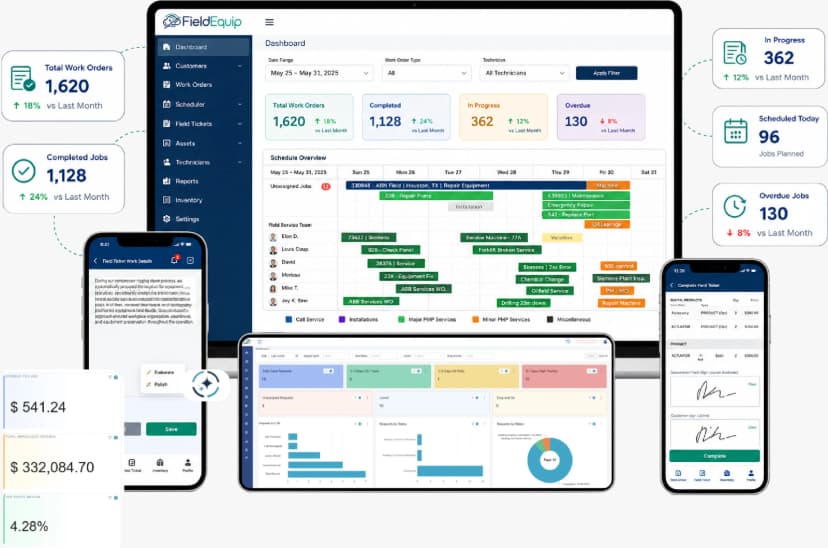
Asset management software plays a crucial role in optimizing field service and industrial operations. It provides a centralized platform to monitor, track, and maintain assets.
This software helps businesses manage the complexity of industrial environments by automating routine processes. It ensures accurate data collection and offers real-time visibility into asset performance.
Key features of asset management software include:
- Automated Maintenance Scheduling: By setting up predefined intervals or using predictive data, businesses can ensure that the service assets at the optimal time. This reduces the risk of breakdowns and minimizes costly downtime. Automated alerts and work orders can notify technicians when maintenance is due, streamlining the entire process.
- Inventory Management: Managing spare parts and equipment inventory is critical in industrial field services where downtime must be minimal. Asset management software tracks inventory levels in real time and ensures that necessary parts are available when needed. This reduces the risk of delays due to missing components and allows businesses to optimize stock levels, saving costs by avoiding overstocking.
- Real-Time Asset Monitoring: Asset management software provides continuous monitoring of asset health and performance. With real-time data from IoT devices and sensors, businesses can track the status of equipment. This helps identify potential issues early and take proactive steps to avoid downtime. This level of monitoring also allows companies to make informed decisions about asset utilization, replacement, or upgrades.
How Predictive Maintenance Improves Asset Longevity
Predictive maintenance is a data-driven approach that uses real-time monitoring and analytics to predict when equipment failures might occur. This allows for timely intervention before a breakdown happens.
Such a proactive strategy extends the lifespan of assets, reduces downtime, and cuts unnecessary maintenance costs.
By leveraging technologies like the Internet of Things (IoT) and data analytics, you can continuously monitor equipment health. IoT sensors gather valuable data on factors such as temperature, vibration, and wear.
Analyzing it helps detect patterns and trends that indicate potential issues. This early detection allows businesses to address problems before they escalate, preventing unplanned downtime and costly repairs.
Transitioning from reactive maintenance, where repairs happen after a failure occurs, to predictive maintenance offers significant advantages. Reactive maintenance often leads to increased downtime. That's because repairs may take longer and require urgent parts procurement.
In contrast, predictive maintenance allows businesses to schedule repairs at the most convenient times. It helps reduce disruptions and ensure that equipment operates efficiently for longer periods.
The Future of Industrial Asset Management
As technology continues to evolve, cutting-edge innovations will transform the future of industrial asset management. These advancements will enable businesses to manage assets with greater precision, efficiency, and foresight.
Key trends shaping the future include:

AI-Driven Asset Management
Artificial Intelligence (AI) will revolutionize field service and asset management. It will enable smarter, data-driven decision-making.
AI algorithms can analyze vast amounts of data from IoT sensors and other sources to identify patterns, predict failures, and optimize asset utilization. With AI, companies can automate complex maintenance decisions, improve the accuracy of forecasts, and increase overall operational efficiency.
Advanced IoT Integration
IoT devices are already critical in real-time asset monitoring, but the next generation of IoT technology will offer even more advanced capabilities.
Future IoT systems will provide deeper insights into equipment performance, environmental conditions, and usage patterns. This will allow for more accurate predictive maintenance and better resource allocation.
Seamless integration with AI and data analytics platforms will further enhance decision-making and operational control.
Increased Automation in Maintenance Management
Automation will play an even more significant role in field service management and industrial asset management in the future. From automated maintenance scheduling to self-monitoring assets that can initiate repair orders, you can expect a shift toward fully autonomous systems.
This will reduce human intervention, minimize errors, and enable faster responses to maintenance needs. Ultimately, this will lead to improved asset longevity and reduced operational costs.
Enhance Industrial Asset Management with FieldEquip
Industrial asset management is essential for optimizing the performance and longevity of equipment. With it, businesses can greatly improve operational efficiency and reduce downtime.
To fully harness these benefits, adopting a comprehensive asset management solution is crucial. Explore how FieldEquip can streamline your operations and transform your asset management strategy. Request a demo today.
A Clearer Way to Run Field
Service Operations
Field service challenges are not just operational. They directly affect cash flow, billing accuracy, and scalability.
Schedule a Demo